
Dual temperature input: Type K thermocouple and digital infrared sensor
KIR23 Dual Thermocouple and Infrared Input on CAN Bus
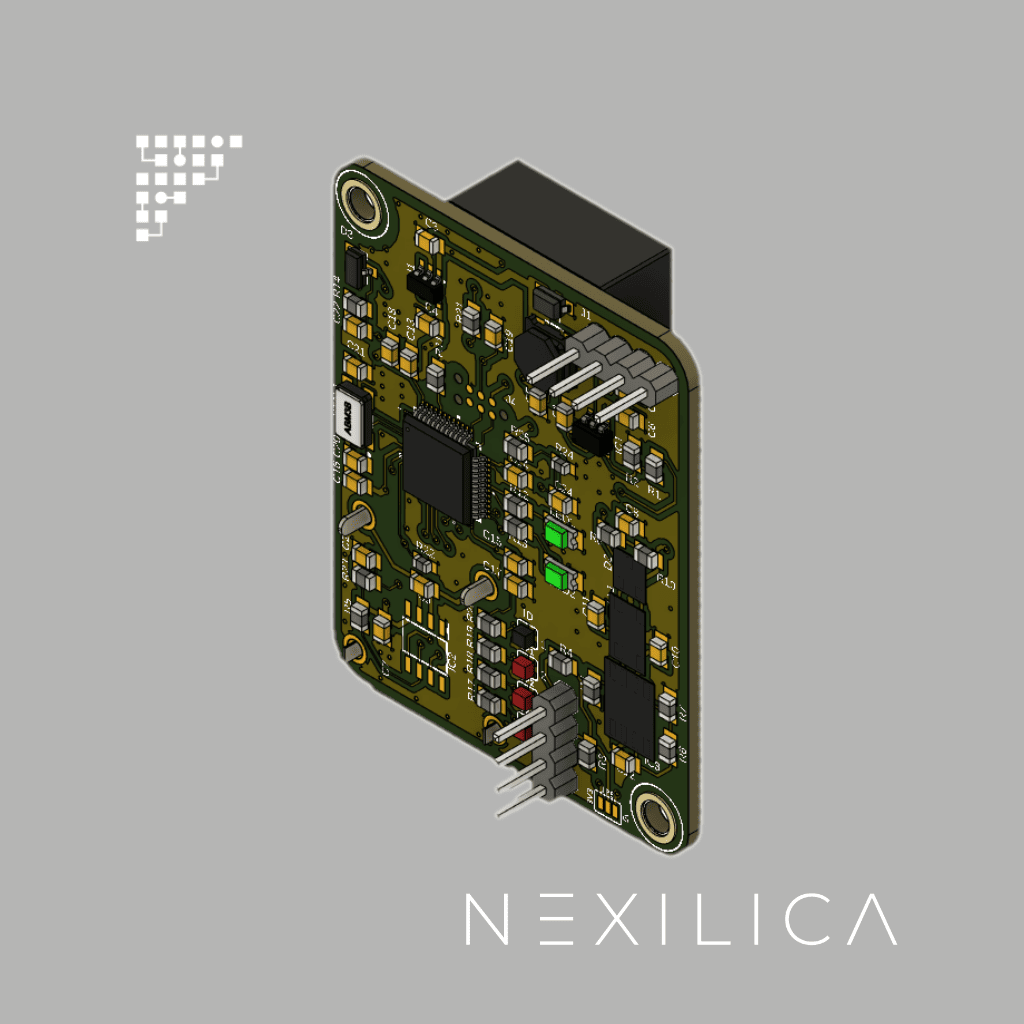
KIR23 is an intelligent electronic adapter that acquires signals from a Type K thermocouple and a digital infrared sensor, converting them into fully configurable standard CAN bus messages.

OVERVIEW
Dual thermal input on CAN
KIR23 is an intelligent electronic adapter that acquires signals from a Type K thermocouple and a digital infrared sensor, converting them into fully configurable standard CAN bus messages.
Designed for harsh industrial environments — from production lines to industrial test benches — KIR23 integrates cold junction compensation and digital calibration in a compact PCB form factor, ready for installation in tight spaces and direct integration into existing CAN networks.
Typical applications include monitoring industrial furnaces and heat treatment processes, non-contact temperature measurement on hot surfaces in production lines (plastic extrusion, molding, foundry) and thermal monitoring of bearings and motors on rotating machinery for predictive maintenance.
Like all NEXILICA products, KIR23 is born from our in-house electronic design with direct technical support from the engineers.
01 / Features
Key Features
The features that make this product unique
Automatic cold junction compensation for maximum accuracy
Fully configurable CAN messages: ID, data format, and transmission rate
Built-in digital calibration for both measurement channels
Intuitive desktop configuration software included
Compact form factor for engine bay and tight-space installation
02 / Advantages
Advantages
01
Dual sensing
two temperature measurement technologies in one compact device
02
Plug & play on CAN
integrates into existing CAN networks without infrastructure changes
03
Flexible configuration
customizable CAN messages to match any protocol
04
Industrial reliability
engineered to withstand vibrations, extreme temperatures, and harsh EMC environments
03 / Specifications
Technical Specifications
01 · SENSORS
Sensors
Type-K TC + digital IR + 2x NTC
Thermocouple
Type K, factory-calibrated
Infrared
Contactless, -70°C / +380°C (±0.5°C)
02 · COMMUNICATION
CAN interface
CAN 2.0A, CANopen (CiA 301)
Baud rate
125 kbit/s default, configurable
Node ID
16 IDs via JP1-JP4 jumpers
03 · POWER · PHYSICAL
Supply
9V - 28V (12V typical)
Current draw
14 - 32 mA (21 mA typical)
Operating temperature
-20°C / +125°C
Dimensions
50 x 40 mm
04 / Applications
Applications
Thermal Measurement Scenarios
- 01 Furnaces
Industrial furnace and heat treatment process monitoring
- 02 Extrusion
Non-contact temperature measurement on hot surfaces in production lines (extrusion, molding, foundry)
- 03 Predictive maintenance
Bearing and motor thermal monitoring on rotating machinery for predictive maintenance
- 04 Test bench
Engine and exhaust thermal monitoring on automotive test benches
- 05 Lab automation
Thermal data acquisition in automated test systems
- 06 Field monitoring
Field-level thermal surveillance of electronic components
05 / Gallery
Gallery
06 / FAQ
KIR23: Our Customers' Questions
What thermocouple types does the KIR23 support?
KIR23 is designed for Type K thermocouples, which are the most widely used thermocouple type in industrial, automotive and process applications due to their broad temperature range and durability. The device includes automatic cold junction compensation to ensure accurate readings regardless of the ambient temperature at the connection point.
What is the measurement range of the infrared sensor on the KIR23?
The digital infrared sensor on KIR23 provides non-contact temperature measurement suitable for moving parts, rotating components, conveyor surfaces and hot industrial parts that are difficult to reach — for example pieces on extrusion lines, furnace surfaces or bearings on rotating machinery. The exact measurement range and field of view depend on the specific IR sensor module fitted. Full specifications are detailed in the product datasheet.
What are the operating temperature limits of the KIR23?
KIR23 is engineered for harsh environments and features an extended operating temperature range suitable for engine bay installation in industrial vehicles, automotive test benches and high-temperature industrial process monitoring. The compact PCB form factor is designed to withstand vibrations, thermal cycling, and demanding EMC conditions typical of these environments.
How is the KIR23 calibrated, and can I recalibrate it in the field?
KIR23 includes built-in digital calibration for both the thermocouple and infrared measurement channels, applied during manufacturing for out-of-the-box accuracy. Calibration parameters can be adjusted through the desktop configuration software, allowing you to fine-tune or recalibrate the device in the field without returning it to the factory.
Explore more
Related services and products for this solution

GET IN TOUCH
Ready to integrate KIR23?
Need thermocouple temperature measurement on CAN bus? Contact us, we reply within 1-2 business days.
Contact Us